About Me
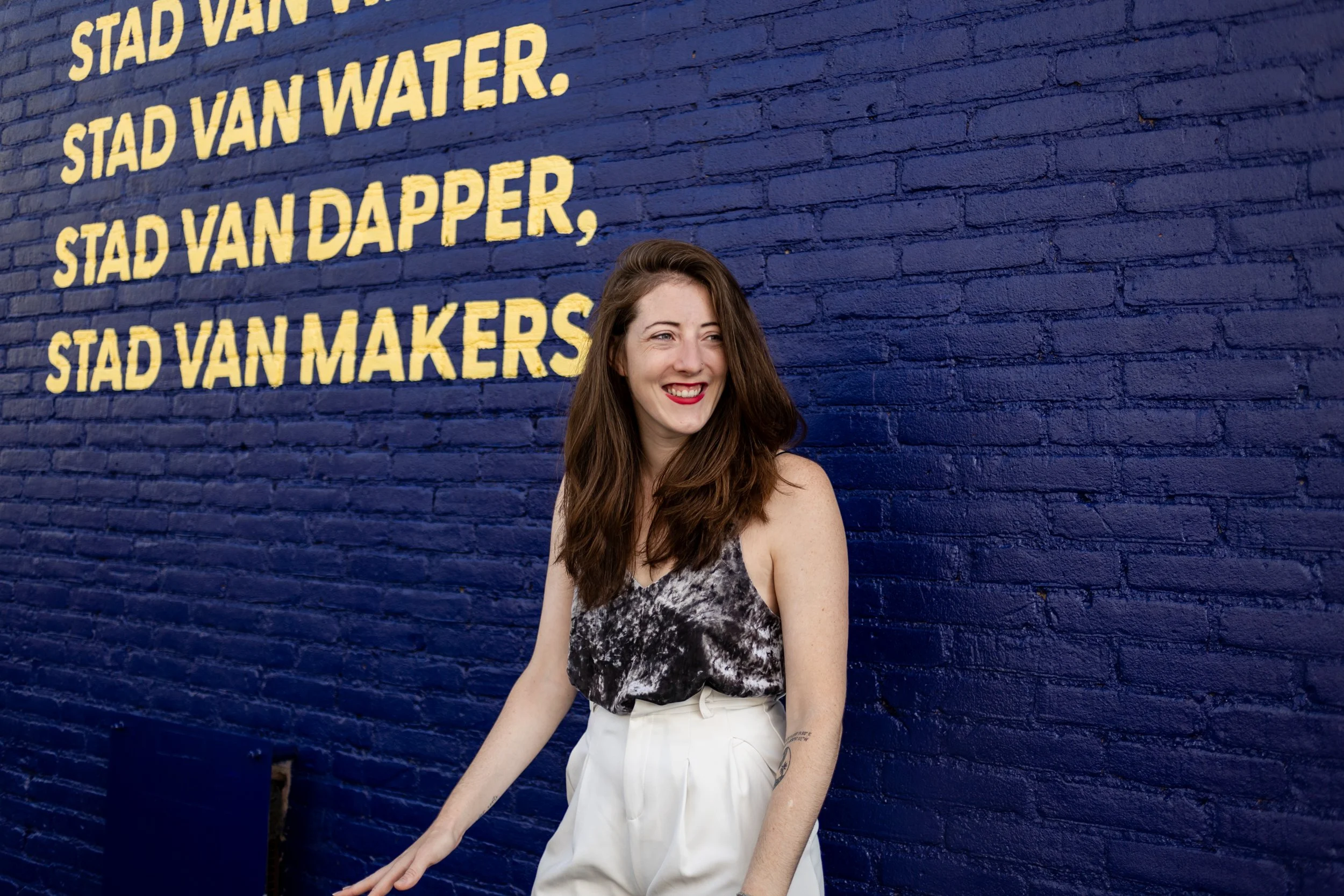
I'm Victoria, an evaluation and sensemaking specialist based in Rotterdam. I work with foundations, development finance institutions, UN agencies, INGOs, and government bodies to find out whether their programmes in climate, circular economy, and social inclusion are genuinely shifting systems, and what to do when the evidence says they are not.
My role sits at a specific point in the chain, where evidence meets power. In most situations, I am not the best placed person to lead ground level interviews or focus groups in communities whose language and lived experience I do not share, that work is usually best led by people with real proximity to the communities involved, and I build teams around that principle. There are exceptions where I do take this on directly, but as a general rule, my part begins once that evidence exists: coding and synthesising complex or fragmented data, running Theory of Change and Contribution Analysis work, and facilitating sensemaking sessions that help programme teams, funders, and boards see clearly enough to act, on outcomes, resourcing, and policy.
I have spent seven years embedded in some of the most demanding portfolio evaluation work in the sector, running outcome harvesting at scale, facilitating sensemaking with senior leadership, and building evaluation frameworks designed for complexity rather than against it. Before this, I spent two years as a Peace Corps Community Development Advisor in Comoros, an experience that shaped how I think about participatory approaches and the gap between what programmes intend and what actually happens. Nature has always been where I find peace, and growing up, resources were never something we took for granted, so living somewhere where something as simple as rainfall could decide whether a community had enough water turned a long held instinct into a professional conviction: the people with the least tend to carry the heaviest cost of environmental strain, and they are rarely the ones deciding what happens next.
My Master's thesis asked what motivates women entrepreneurs to build circular businesses in Brazil. That question still sits at the centre of most of what I do: who benefits from a transition, and who gets left out of it. Circular economy and social inclusion, where transitions claim to be good for people as well as the planet, is where I feel most at home, though the same question, who genuinely benefits, runs through all of my climate and GEDSI work.
I'm multilingual and have worked across four continents, and I think evaluation done honestly is one of the most powerful tools we have for making systems change and circular transitions actually accountable to the people they are meant to serve. I'm always interested in hearing from organisations who take that seriously, and from researchers and facilitators with the lived experience and language fluency to lead ground level work well, since much of what I do works best in partnership, not alone.
By the Numbers:
7+ years in complex systems-change evaluation
500+ outcomes analysed annually (Laudes Foundation portfolio)
50+ Key Informant Interviews across 4 continents
10+ countries of evaluation and fieldwork experience
Notable Clients:
Laudes Foundation
British International Investment (BII)
CFYE/ Netherlands Ministry of Foreign Affairs
Climate Fund Managers
CBI
Circular Clarity Ecosystem
Wellcome Trust
Methods
Outcome Harvesting
Developmental Evaluation
Contribution Analysis
Rubric-based MEL
Thoery of Change Development
GEDSI Frameowrks
Mix Methods
Dedoose
LANGUAGES
English — Native
Portuguese — Working Proficient
Spanish — Working Proficient
Italian - Speaking Proficient
Comorian — Speaking Proficient
French — Basic / Strong Comprehension
Dutch — Basic / Strong Comprehension
Partnerships
TC wouldn’t be anything without partnerships and collectives. Here are just a few of the incredible collaborations/collectives that Tully’s Consult is apart of!